





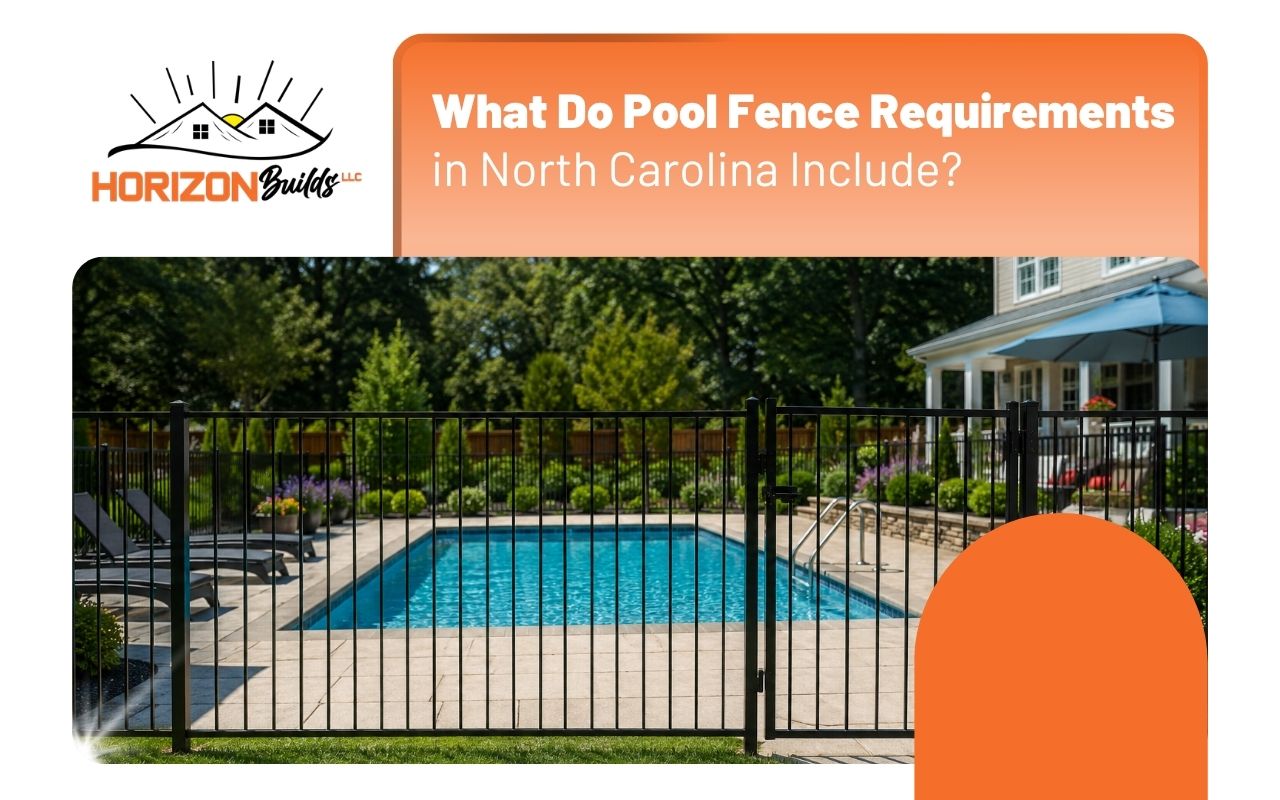
What Do Pool Fence Requirements in North Carolina Include?
Many North Carolina pool projects fail when the fence is treated as an afterthought. Before posts are set, homeowners should understand safety rules, gate needs, and local review steps. For planning help on materials and project scope, review our Fence and Deck Cost Materials Guide NC.
What Do Pool Fence Requirements in North Carolina Include?
Pool fence requirements in North Carolina include barrier height, limited openings, safe ground clearance, self-closing gates, and latch rules. These standards help reduce unsupervised pool access and support safer backyard use when the fence is planned, installed, and checked correctly.
A pool barrier is the fence, wall, gate, or approved enclosure that controls access to a pool, spa, or hot tub. Homeowners need it when open water creates a safety risk for children, guests, or neighbors. It solves the problem of easy entry into the pool area without adult awareness.
Understanding Pool Fence Requirements in North Carolina Protects Families
Pool fence requirements in North Carolina focus on limiting access to water before a child, guest, or pet can enter the pool area alone. These rules are not only about appearance. They guide fence height, gaps, gates, latch placement, and climb resistance.
At Horizon Builds LLC, we look at the yard layout, pool location, and likely access points before discussing fence options. A fence may look finished but still create safety risks if the gate does not latch or the bottom gap is too large.
Barrier height should meet local code review.
Gate hardware should close and latch on its own.
Openings and spacing should block easy passage.
Nearby objects should not help someone climb over.
Because local offices may handle permits differently, homeowners should confirm city or county requirements before installation begins.
Choosing Code-Compliant Pool Fencing Supports Safer Backyard Design
Code-compliant pool fencing works as one complete safety system around the pool. The fence, gate, latch, ground clearance, and nearby landscaping must work together. One weak point can reduce the safety value of the whole barrier.
When homeowners contact Horizon Builds LLC, we ask about the pool type, yard slope, planned entry points, and existing structures. This helps us explain practical design choices before materials are selected. The City of Raleigh notes that pool barriers commonly need a 48-inch top height and controlled bottom clearance, which makes planning important.
Helpful design checks include:
Measure from the side facing away from the pool.
Check sloped ground in more than one place.
Keep furniture, planters, and storage away from the fence.
Review gate swing direction before installation.
For broader planning before your project, visit our Home page and compare your next steps.
Selecting Aluminum Pool Fence Materials Improves Outdoor Safety
An aluminum pool fence can be a smart choice when homeowners want visibility, weather resistance, and a clean backyard look. However, the material alone does not make the fence compliant. The design, spacing, gate hardware, and installation details matter most.
With Horizon Builds LLC, you get guidance on how aluminum panels may fit your yard, pool location, and safety needs. Aluminum pickets can help adults see into the pool area, which supports better supervision. They also create a neat boundary without making the pool feel closed off.
Important decision factors include picket spacing, post placement, gate strength, and non-climbable layout. A beautiful aluminum pool fence still needs careful review around slopes, patios, steps, and retaining walls. Before choosing a final layout, check how people will move through the yard each day.
Planning Gates And Openings Prevents Common Inspection Problems
Gates and openings often create the biggest pool barrier concerns. A pool gate should not stay open like a normal yard gate. It should close, latch, and help protect the pool area even when someone forgets to pull it shut.
At Horizon Builds LLC, we check gate location, swing direction, latch access, and nearby objects before work begins. Pedestrian gates are commonly expected to open away from the pool and use self-closing, self-latching hardware. Openings should also be small enough to stop easy passage.
Use self-closing hardware on pool entry gates.
Test the latch from several open positions.
Avoid climbable rails on the outside face.
Keep chairs and boxes away from the barrier.
If your current fence has loose sections or a weak gate, use Contact Us to ask about the next step.
Reviewing Project Steps Clarifies Your Fence Installation Process
A clear process helps homeowners understand what happens before a pool fence is installed. The goal is to review the property, explain options, and prepare for a fence layout that supports safety and local code expectations.
When you choose Horizon Builds LLC, we start by learning about your pool, yard access, preferred material, and current project stage. We may ask about permits, pool type, gates, slopes, and any existing deck or wall near the water.
Share pool and property details when you contact us.
Review the yard layout and likely fence path.
Discuss material options, including aluminum pool fence designs.
Confirm gate locations and access needs.
Explain practical next steps before installation begins.
The NC Department of Insurance Office of the State Fire Marshal explains that swimming pool barrier requirements are part of pool code requirements. Because of that, code-compliant pool fencing should be planned with the full pool project, not after the pool is ready for use.
Frequently Asked Questions
Do North Carolina pool fences need self-closing gates?
Yes, pedestrian pool gates are commonly expected to self-close and self-latch. This helps protect the pool area when someone forgets to shut the gate. For project questions, start with Contact Us and share your pool layout.
What height should a backyard pool barrier reach?
Many North Carolina pool barrier rules use a minimum top height of 48 inches above grade, measured from the side facing away from the pool. Local offices may review details differently, so confirm requirements before installation begins.
Can an above-ground pool use its wall as barrier?
Sometimes an above-ground pool wall may count as part of the barrier, but homeowners should not assume approval. Ladders, steps, decks, and platforms can create access points. Review your project through our Fence and Deck Cost Materials Guide NC.
Is aluminum a good material for pool fencing?
Aluminum can work well because it offers visibility, clean style, and outdoor durability. Still, the fence must meet spacing, height, gate, and climb-resistance needs. The material should support safety, not only improve the backyard appearance.
Who checks pool barrier rules before installation begins?
Local building departments usually review pool barrier details during permit and inspection steps. Homeowners should confirm local rules before installation. To discuss your fence plan with our team, visit Contact Us.
Schedule Clear Fence Guidance Before Your Pool Opens
Before anyone uses the pool, make sure the fence layout, gates, and materials support safe access control. Pool fence requirements in North Carolina are easier to manage when planning starts early. Review your options, prepare your questions, and use Contact Us to request guidance for your project.