





What Causes Fence Moisture Damage and How Can You Prevent It?
What Causes Fence Moisture Damage and How Can You Prevent It?
Identify Common Causes of Fence Moisture Damage Before Rot
Use Gentle Fence Cleaning Methods to Protect Wooden Surfaces
Strengthen Fence Rot Prevention Through Drainage and Landscaping Improvements
Recognize Early Fence Rot Signs Before Structural Repairs Escalate
Plan Seasonal Fence Maintenance for Lasting Wood Protection
Can a wet wooden fence dry without developing permanent damage?
Should homeowners keep mulch and garden soil away from fences?
Does staining or sealing completely prevent moisture damage to fencing?
What are the earliest visible signs of wood fence rot?
When is replacing damaged fence boards better than repairing them?
Fence moisture damage develops when wood stays damp for extended periods, drainage is poor, or protective finishes deteriorate. To prevent it:
Improve drainage around posts and lower boards.
Remove leaves, mulch, and vegetation touching wood.
Clean fence surfaces without damaging wood fibers.
Maintain suitable stains or protective coatings.
Inspect posts, rails, and fasteners for early decay.
Persistent moisture can weaken a fence before visible damage becomes severe. At Horizon Builds LLC, we bring over 15 years of hands-on experience to outdoor construction projects. If your fence shows deterioration, you can Request Your Free Fence Estimate to explore suitable solutions.
Identify Common Causes of Fence Moisture Damage Before Rot
Fence moisture damage often begins where water collects or wood dries slowly. Lower boards, post bases, shaded corners, and dense landscaping create conditions that encourage prolonged dampness. Recognizing these areas early helps homeowners prevent minor surface problems from developing into structural deterioration.
Common moisture sources include:
Poor drainage: Standing water saturates soil surrounding fence posts.
Vegetation buildup: Dense shrubs and climbing vines restrict airflow.
Improper irrigation: Sprinklers repeatedly soak wooden boards.
Damaged finishes: Worn protective coatings expose wood to repeated wetting.
Ground contact: Soil and mulch keep vulnerable surfaces damp.
In Hendersonville, NC, extended rainy periods can make these conditions more noticeable. Therefore, check fence sections that remain damp after nearby surfaces have dried.
For homeowners considering more moisture-resistant construction options, our Hendersonville Fence Installation Services explain available fencing materials and installation considerations.
Use Gentle Fence Cleaning Methods to Protect Wooden Surfaces
Fence cleaning helps remove dirt, algae, leaves, and organic residue that retain moisture against wooden surfaces. Gentle washing also makes it easier to identify damaged boards, worn coatings, and loose hardware. However, aggressive pressure washing can damage wood fibers and increase future maintenance needs.
For practical wood fence care, follow these steps:
Remove loose debris: Sweep away leaves, cobwebs, and accumulated dirt.
Use appropriate cleaning products: Select a wood-compatible cleaner and follow its instructions.
Scrub gently: Clean affected areas using a soft-bristle brush.
Rinse carefully: Avoid forcing water into joints or damaged surfaces.
Allow complete drying: Wait before applying any protective finish.
Cleaning frequency depends on local conditions. Shaded fencing or areas exposed to irrigation may require more attention than sunny sections.
After cleaning, inspect boards for discoloration, splintering, or unusual softness. Our team at Horizon Builds LLC recommends addressing visible deterioration before it affects surrounding components.
Strengthen Fence Rot Prevention Through Drainage and Landscaping Improvements
Fence rot prevention depends heavily on controlling moisture around wooden posts and lower rails. Even properly finished wood can deteriorate when water repeatedly accumulates nearby. Better grading, improved airflow, and careful landscaping reduce prolonged exposure and help fencing dry between rainy periods.
Consider these practical improvements:
Keep mulch and soil from resting against exposed wooden boards.
Redirect sprinkler heads away from fence surfaces.
Clear leaves and debris from the fence base.
Trim shrubs and vines to improve airflow.
Check whether downspouts discharge water toward fence posts.
According to the USDA Forest Service, moisture conditions strongly influence wood deterioration and dimensional changes. Consequently, good drainage matters alongside durable materials and protective finishes.
When installation details contribute to recurring moisture problems, material selection deserves attention. Our Fence and Deck Materials Guide helps homeowners compare options for outdoor construction.
With Horizon Builds LLC, we emphasize durable materials and precise installation practices that support long-term outdoor performance.
Recognize Early Fence Rot Signs Before Structural Repairs Escalate
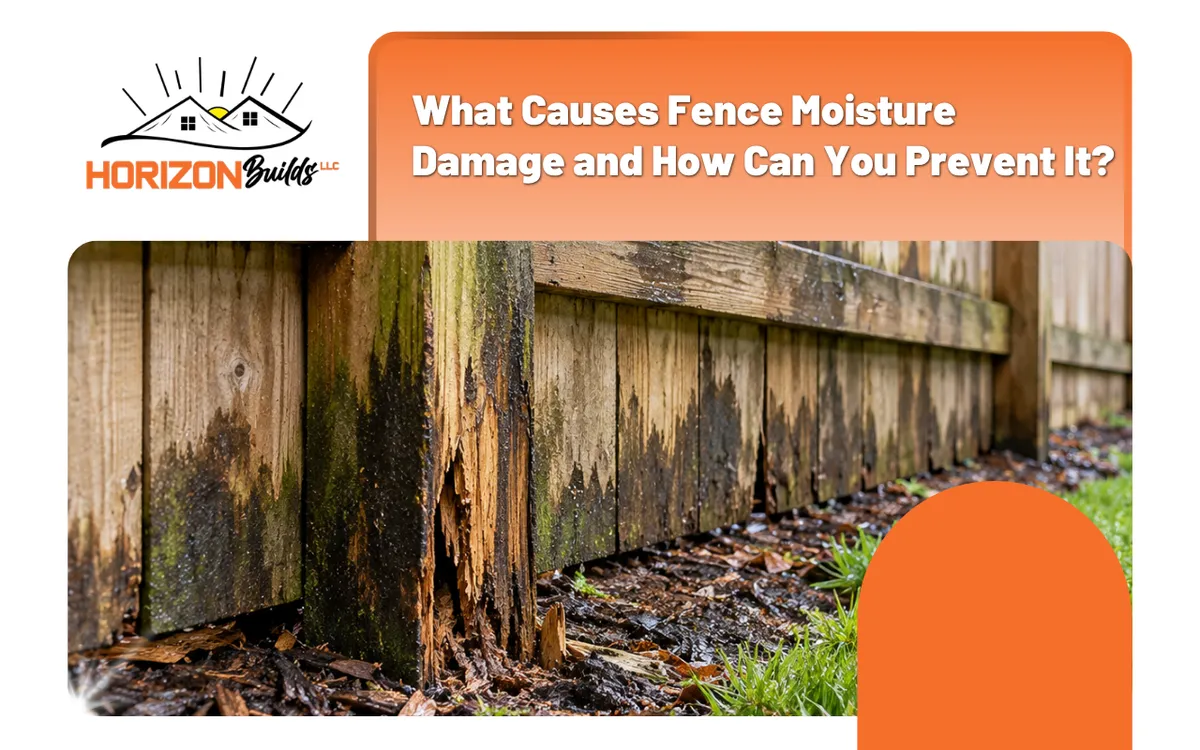
Early wood decay may appear as dark staining, soft fibers, crumbling surfaces, or loose connections. However, discoloration alone does not confirm rot. Structural concerns become more serious when posts move, rails weaken, or fasteners no longer hold securely.
Look closely at these warning signs:
Soft wood: Boards feel spongy or crumble under light pressure.
Loose posts: Fence sections shift or lean unexpectedly.
Damaged fasteners: Rust, staining, or movement appears around connections.
Splitting rails: Cracks develop near structural attachment points.
Recurring dampness: Particular areas remain wet long after rainfall ends.
Surface stains may respond to cleaning, but decayed structural wood often requires replacement. Applying paint over soft or deteriorated boards will not restore their strength.
At Horizon Builds LLC, we focus on clear communication when reviewing fencing concerns. Our licensed and insured team can help homeowners understand repair and replacement considerations.
If several posts or structural connections appear compromised, Schedule Your Fence Evaluation before the affected section becomes unstable.
Plan Seasonal Fence Maintenance for Lasting Wood Protection
Seasonal fence maintenance helps homeowners identify drainage problems, deteriorating finishes, and loose connections before extensive damage develops. Inspecting fencing after heavy rainfall or severe weather provides useful information about which sections stay wet and which materials may need attention.
Use this seasonal maintenance checklist:
Spring: Remove winter debris, inspect posts, and check for weakened boards.
Summer: Review irrigation patterns and trim vegetation restricting airflow.
Fall: Clear accumulated leaves and examine exposed wood before wetter conditions.
Winter: Observe pooling water and identify drainage concerns from safe locations.
Protective coatings should only be applied when wood moisture levels and weather conditions meet the product manufacturer's requirements. Sealing damp wood can create additional problems rather than prevent them.
When you contact Horizon Builds LLC, we can discuss visible damage, review your project goals, and explain suitable next steps. Our free estimates help homeowners evaluate fencing improvements without making rushed decisions.
Following repairs, continue monitoring the affected location. If moisture returns repeatedly, drainage or landscaping conditions may still need correction.
Frequently Asked Questions
Can a wet wooden fence dry without developing permanent damage?
Yes. Wood can become wet and dry without necessarily developing rot. However, repeated saturation and prolonged dampness increase deterioration risks. Proper drainage and airflow help reduce these problems. If damage appears around posts or rails, explore our Hendersonville Fence Installation Options for potential improvements.
Should homeowners keep mulch and garden soil away from fences?
Yes. Mulch and soil can retain moisture against lower boards and exposed wooden components. Maintaining separation allows better airflow and reduces prolonged dampness. Additionally, keep irrigation directed away from fencing and remove accumulated leaves to help vulnerable sections dry after rainfall.
Does staining or sealing completely prevent moisture damage to fencing?
No. Protective finishes can reduce water absorption, but they cannot eliminate every moisture problem. Drainage, cleaning, airflow, and installation details remain important. Before selecting a coating, review our Outdoor Fence Material Considerations to better understand material choices and maintenance needs.
What are the earliest visible signs of wood fence rot?
Early warning signs include persistent dark staining, softened fibers, crumbling wood, and loose connections. However, stains alone do not prove decay. Examine whether the affected material remains firm and structurally sound. Professional evaluation becomes important when posts move or damaged boards cannot securely hold fasteners.
When is replacing damaged fence boards better than repairing them?
Replacement is usually preferable when decay weakens boards, affects connections, or prevents secure fastening. Minor surface discoloration may only require cleaning or refinishing. If you're uncertain about structural damage, Request a Free Fence Estimate to discuss appropriate repair or replacement options.
Preserve Your Fence With Better Moisture Control and Care
Consistent cleaning, improved drainage, and timely inspections help protect wooden fencing from long-term moisture problems. When deterioration affects posts, rails, or boards, professional guidance can clarify the next step. Our team brings over 15 years of experience, licensed and insured service, and a focus on durable construction. Book Your Free Fence Estimate today.